
Designing an SDGs Workshop for Children
This SDGs workshop was initiated through the course Seminar on Sustainable Societies and Cultures 2, where six students from different countries and academic backgrounds came together to explore ways of communicating sustainability beyond the classroom. Rather than approaching SDGs only from a theoretical perspective, we aimed to engage with society outside the classroom and consider how global goals can be shared in accessible and practical ways.
In this project, we acted as “SDGs ambassadors” by introducing SDG-related ideas to children aged five to six. Given the young age of the participants, we recognized that SDGs can be difficult to explain through conventional teaching methods. Before introducing SDG concepts, we first conducted a short intercultural game session to help the children get to know us and feel more comfortable interacting with people from different countries. Through simple games and activities, the children were introduced to who we are and where we come from, creating a friendly and open atmosphere.
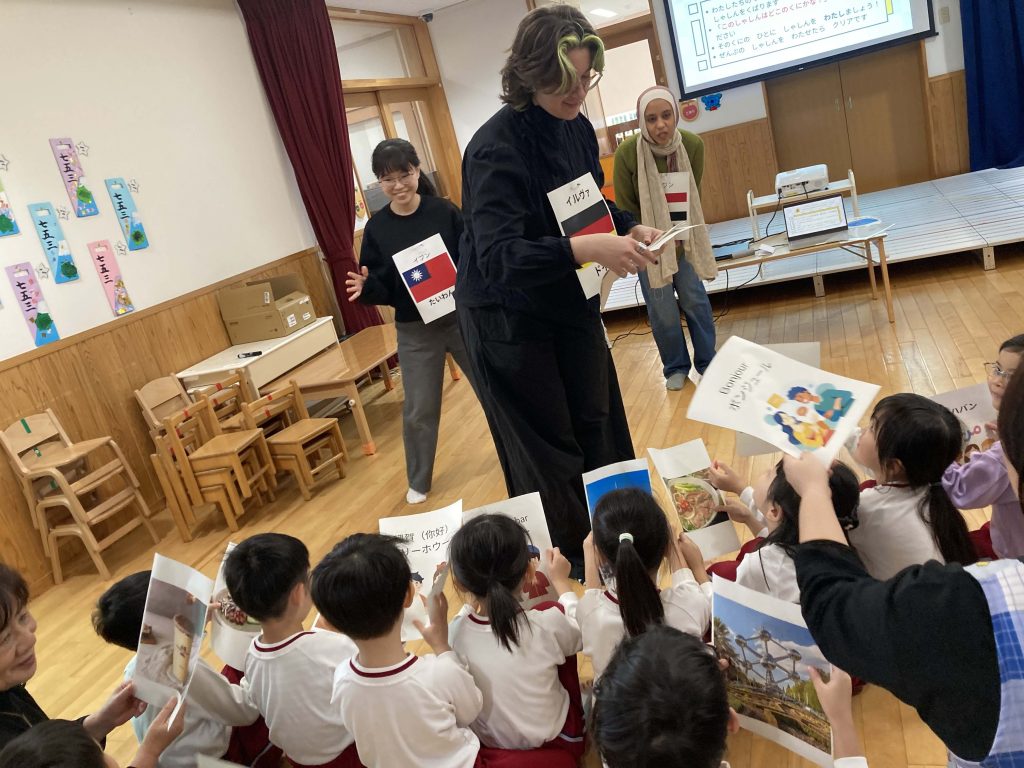
Short intercultural game session about our countries with the children
Learning SDGs Through Play
Drawing on the diverse perspectives within our group, we decided to connect SDG concepts with games and interactive activities. Games provide a familiar and enjoyable learning environment for young children and allow them to learn through play, cooperation, and experience. By embedding ideas such as sharing, caring for others, and protecting the environment into simple games, we aimed to create an engaging starting point for children to encounter SDG-related values and understand that the general idea of SDGs is to make the world a better place.
Based on the idea that game is the easiest way for children to understand new concept, we design a simple interactive game as below:
1. Pick 6 SDGs concepts that we think is easy for children to understand.
2. Select 2 picture for each concept (in total 12), with a positive one and negative one, for example for “Zero Hungry”, we picked a picture for hungry kids, and one for family having a meal together.
3. We made two zone in the class room, one is “happy earth うれしい”, the other is “sad earth かなしい”. We use slides to show 12 pictures one by one with music.
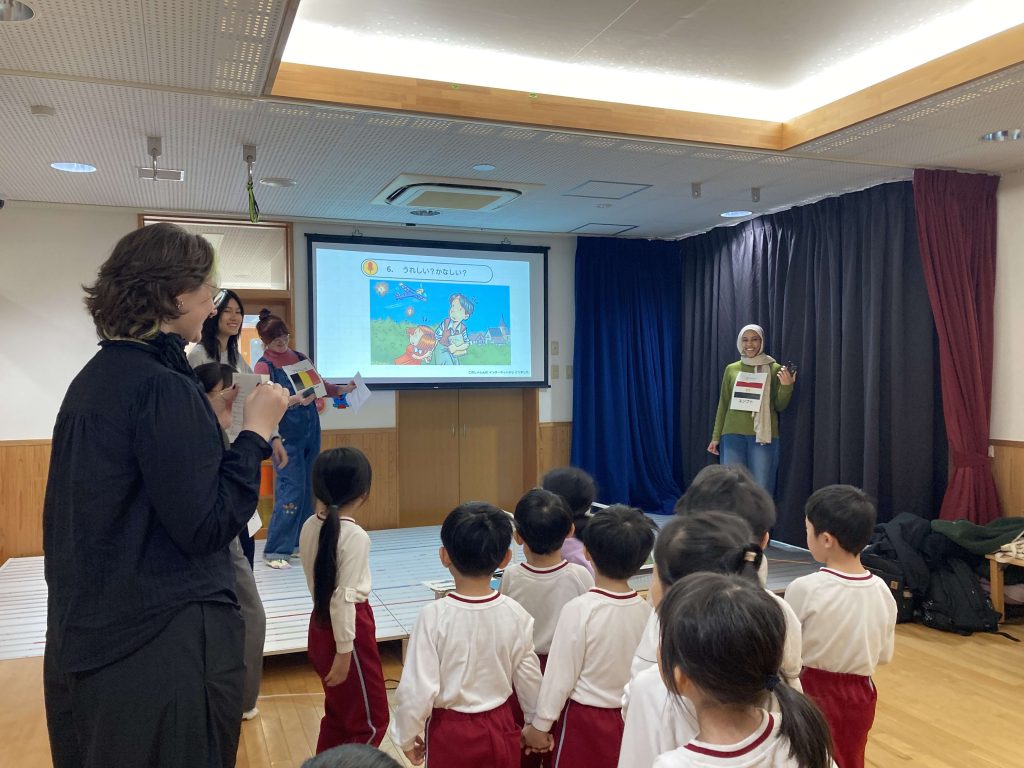
We showed the situation pictures to the children
4. After showing the picture, we let children to think about “Is this picture happy or sad?”, and they should go to the zone they think about the picture.
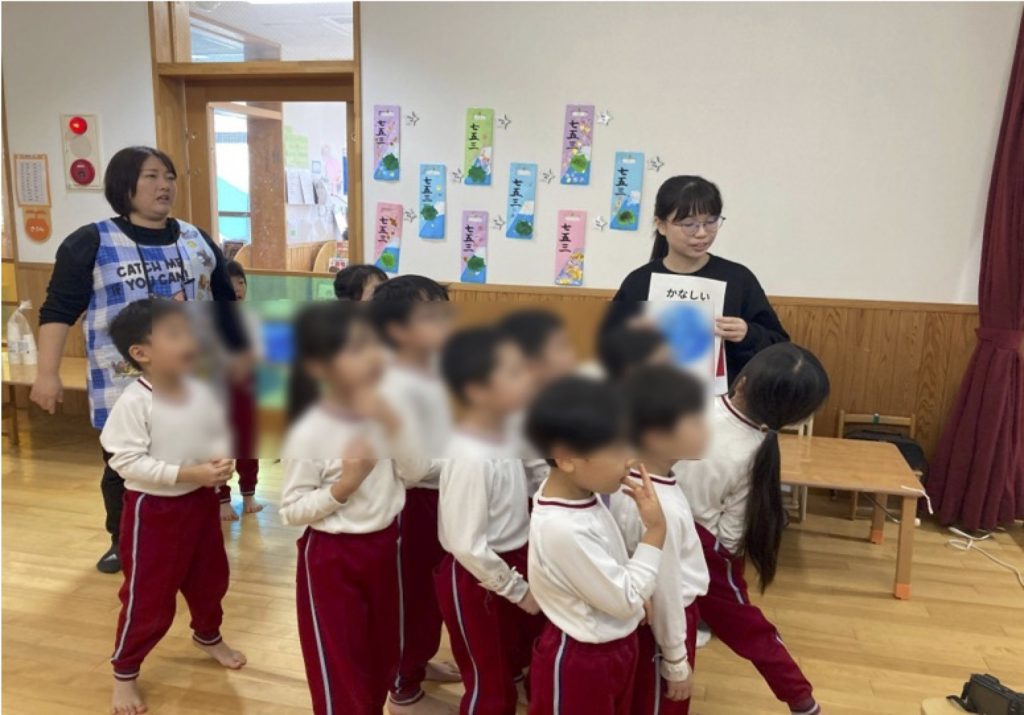
Children picking their choice of Happy or Sad Earth
5. After a few seconds, we show the result of this picture (happy or sad), and easily explain the background of pictures.
In the end of game, we explain the concept of SDGs is making this world a better place, so each time they make a choice of an action, they will try to think again “is this a choice to make the earth a better place?” or “does it helps to make the Earth happier?”
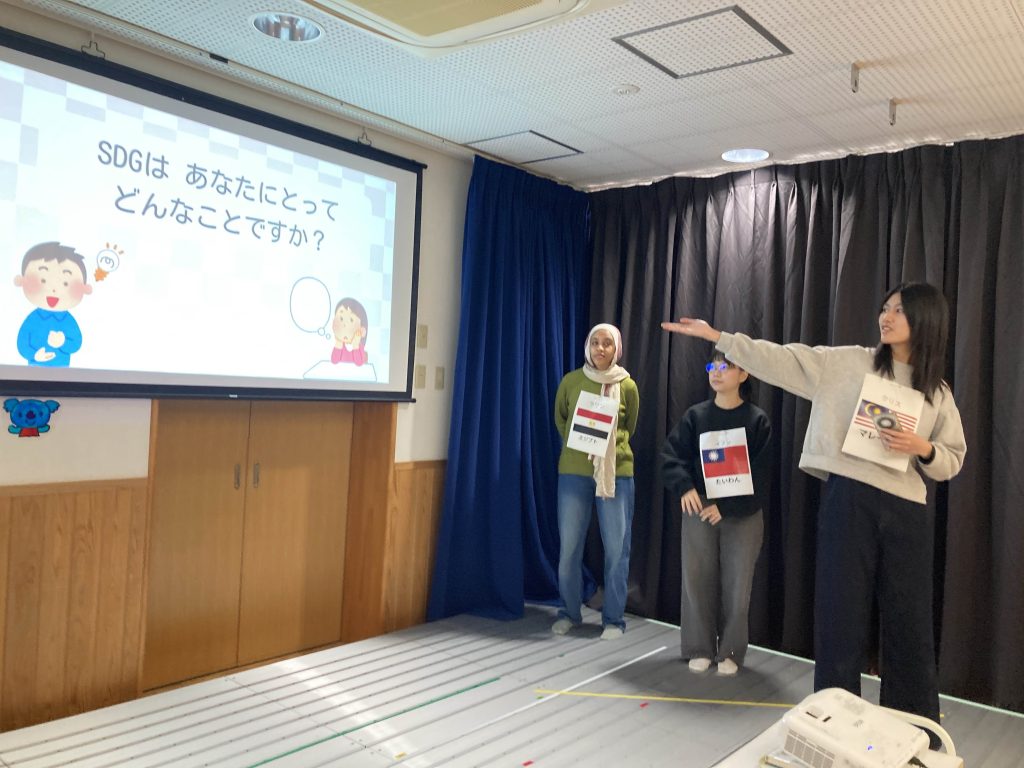
Asking the children on their thoughts on SDGs concept
Letter Exchange
As part of our first activity with the kindergarten children, we had to write a letter addressed directly to the children (since our group was small, two children were assigned to each person, which meant that we had to write two letters per person).
The first difficulty of this exercise was the language: writing a letter in one’s own language can already be complicated, but in a different language, it can be even more difficult. For some members of our group, their level of Japanese was high enough for them to be able to write a letter on their own, without the help of a translator. For others, writing in Japanese was impossible. Thanks to tools such as artificial intelligence, writing these letters was nevertheless possible. But how can we be sure that the text produced is faithful to the original idea? And above all, that it is understandable for six-year-old children? Fortunately, thanks to a review by our teacher, no incomprehensible or overly complex text was given.
Beyond the language barrier, why this exercise? What can it bring to the children or to the students in this course?
First of all, this letter allows the children to be directly confronted with another culture, another way of life. Some studies have shown that exchanges between people from different cultures can help develop social skills such as empathy (Lin, 2018). Moreover, studies on group dynamics have shown that when we belong to a group, we tend to idealize it (the in-group, which conveys good values to us) and, conversely, to feel apprehension toward people who belong to an external group (Oberle, 1998). By initiating contact with the children through these letters, this can therefore break the stereotypes they might have about unfamiliar external cultures, create a connection, and foster openness to the world. This openness could, in the future, promote social equality and prevent discriminatory behaviors (McKeown, 2025).
Finally, the letter format is beneficial in several ways: the fact that it is not direct but prepared in advance allows for adaptability of the message; the letter can be reviewed and adjusted before being given to the child (for example, by changing sentences that are too complicated or by adding illustrations). The children will be able to take their time to read it and keep it as a souvenir.
I (Florence) personally found this exercise very interesting, and I hope that the letters I was able to write will, in one way or another, have helped establish a link between them and my culture.
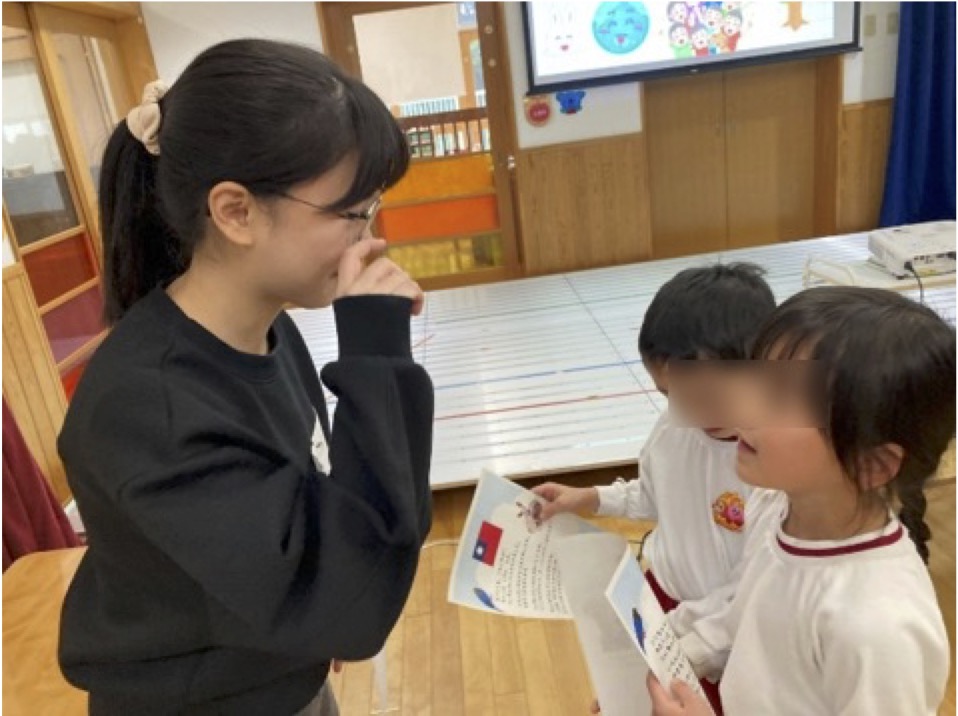
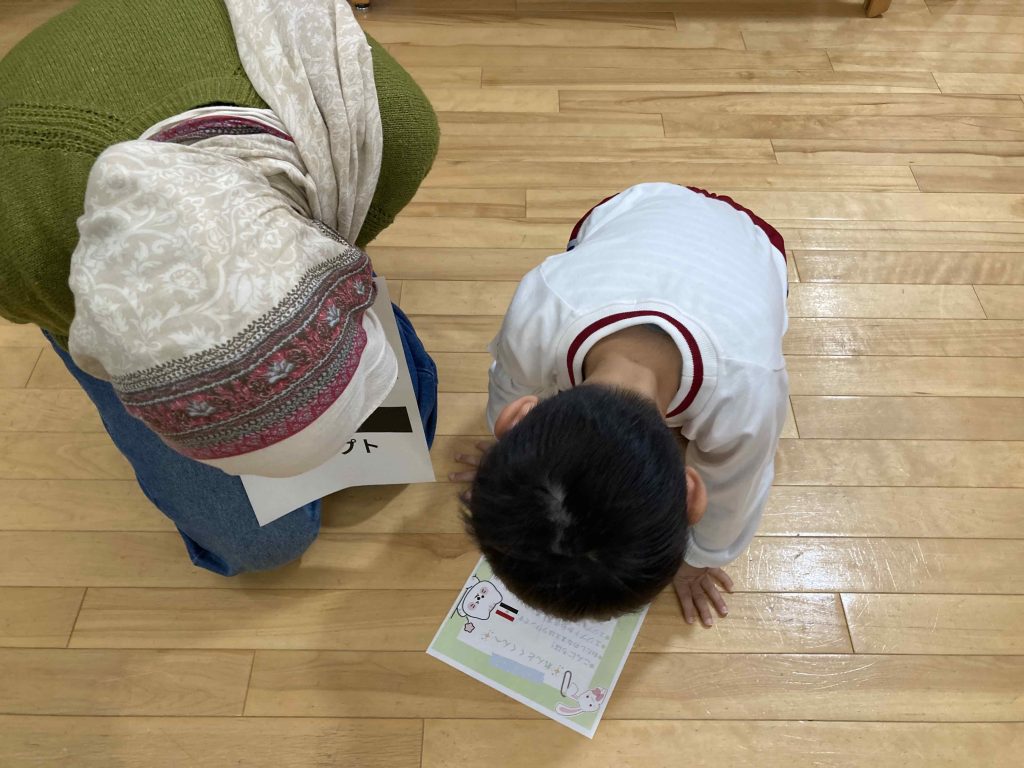
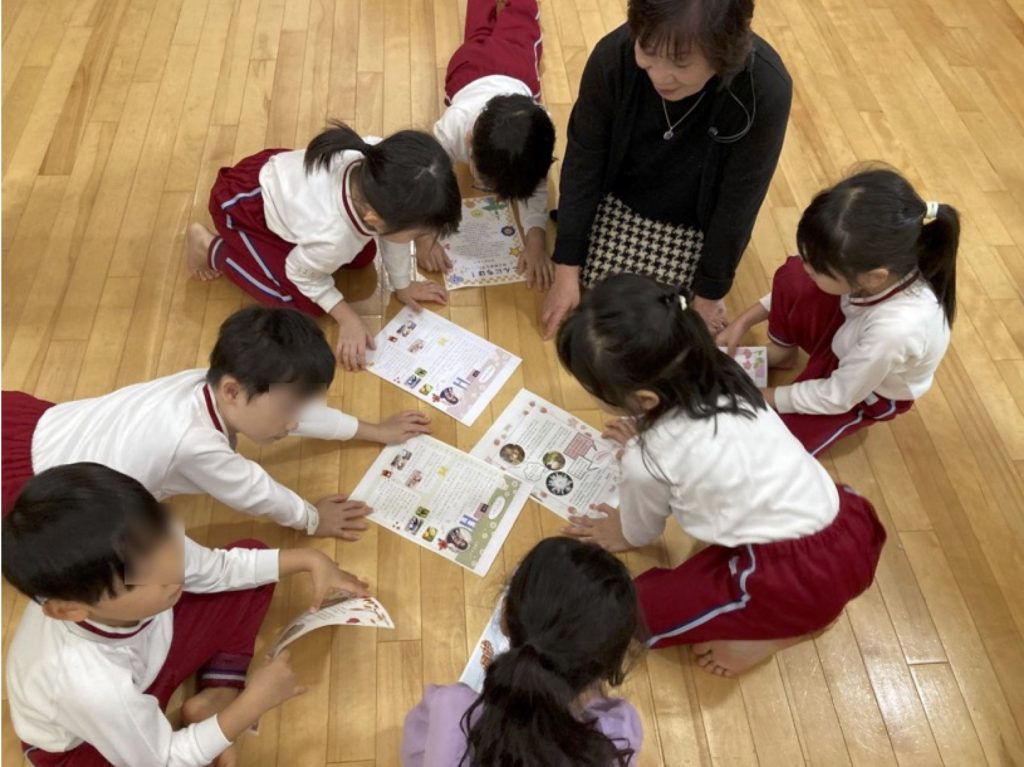
The children were reading the letters they received
Language Barriers in Our SDGs Group Project
In our SDGs class we work in a group in order to come up with ideas and be able to make a good project. We are all from different countries and we speak different languages, and none of us use English as our first language. Even though English is the language we use to communicate, our English levels, accents, and ways of expressing ideas are all different. Because of this, misunderstandings happen sometimes. And we take time to make sure that we all understand and we are all on the same page.
Because of communication problems, finishing tasks takes more time than expected. We need to repeat explanations, write long messages, or confirm many times to make sure everyone understands. Sometimes deadlines feel stressful because simple things become complicated when language becomes a barrier.
However, this experience also teaches us something very important. SDGs are global goals, and in the real world, people from many countries must work together. Learning how to communicate across languages and cultures is not easy, but it is necessary. By being patient, listening carefully, and supporting each other, we slowly improve our teamwork.
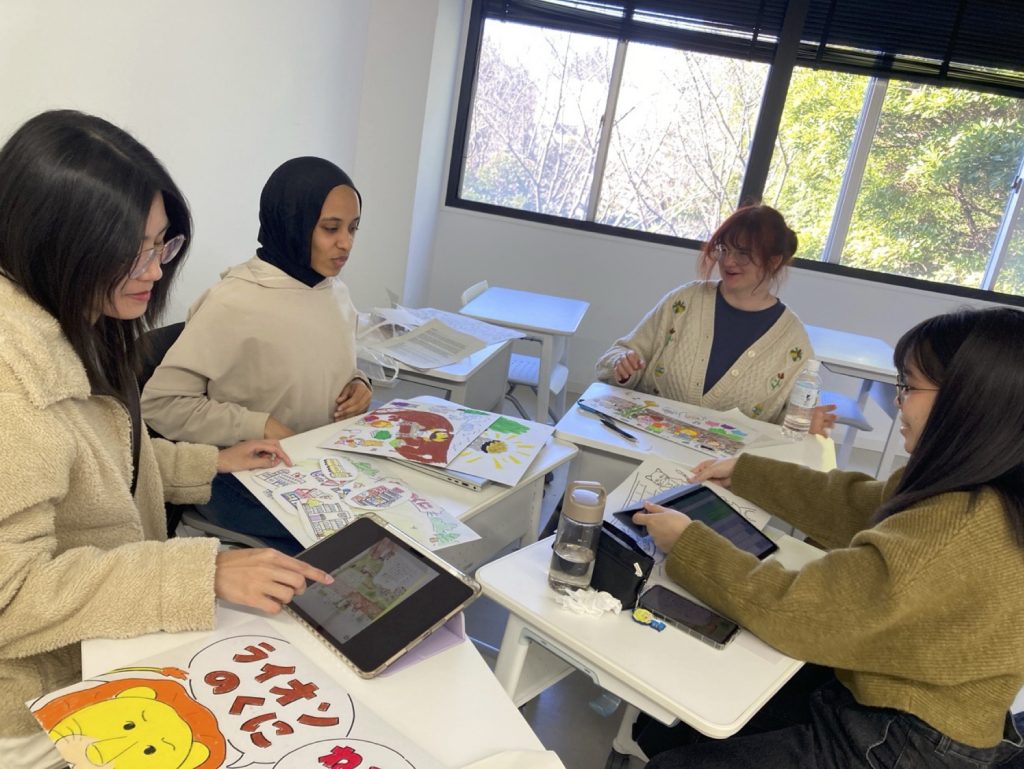
Discussion on the activities and work distribution for the workshop
Brainstorming and Decision Making
The processes of brainstorming and design making play a crucial role when introducing young children to the concept of SDGs. In their case, children learn in a different way when compared to how adults learn. Abstract notions and lengthy explanations would not work with them. The design process requires ideas to be made simpler while retaining their key message.
At the brainstorming phase, one must keep in mind how children perceive the world. Concepts clear to grown-ups can often confuse children. The challenge of designing, therefore, and what it needs, is not the addition of information but the elimination of complexity. By discussion and the exchange of ideas, the ideals of equality, cooperation, and sustainability can be reduced to simple experiences that can be grasped by the children. This designing of ideas is very much essential to be included in the education of SDGs objectives. With carefully designed activities in brainstorming sessions, children would be able to learn values associated with SDGs naturally, even if they do not know anything about “SDGs.”
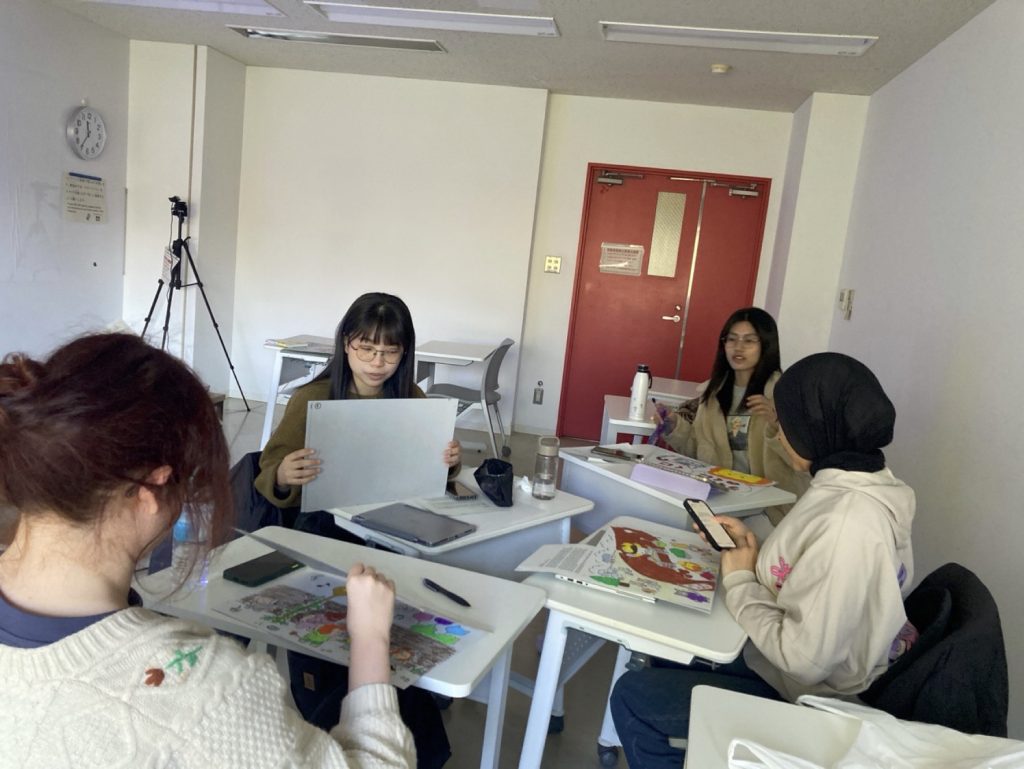
Brainstorming about the games
References
Lin, M. (2018). “I don’t even know where Turkey is.”: Developing intercultural competence through e-pal exchanges. Journal of Global Education and Research, 2(2), 68-81.
https://www.doi.org/10.5038/2577-509X.2.2.1019
OBERLE, D., 1998, Le groupe enpsychologie sociale, Magazine Sciences Humaines.
McKeown, S., Vezzali, L., & Stathi, S. (2025). Understanding and harnessing intergroup contact in educational contexts. British Journal of Social Psychology, 64(2), e12876. https://doi.org/10.1111/bjso.12876